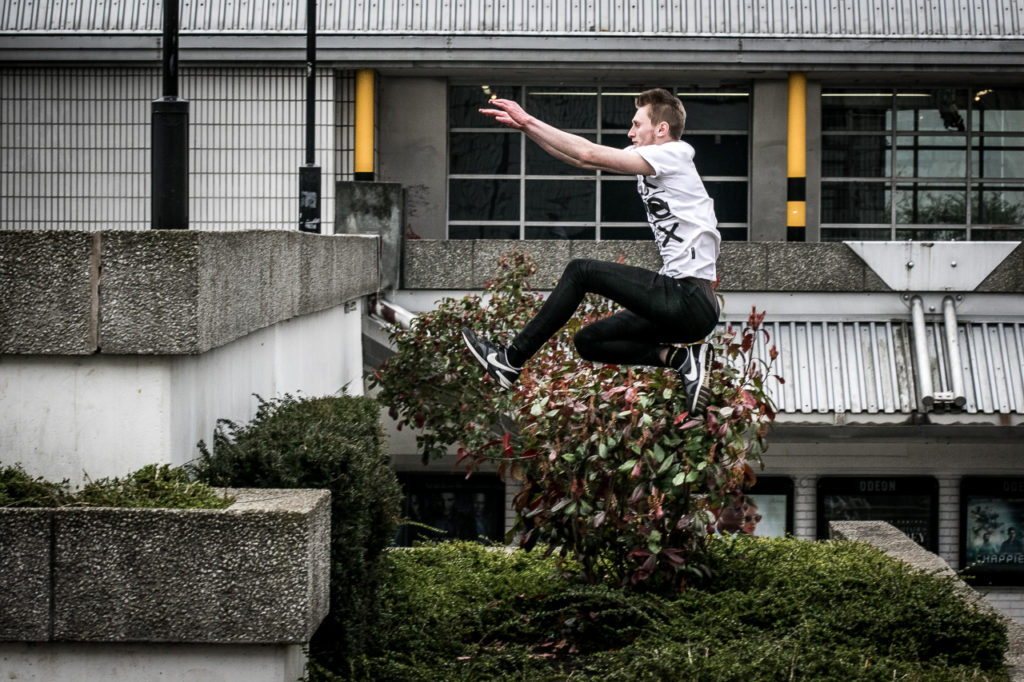
Every UK practitioner of a certain age can tell you exactly where they were the first time they saw parkour on television. Maybe it was a rooftop run squeezed between programmes in 2002. Maybe it was a September evening in 2003, watching a Frenchman drop off the Royal Albert Hall. If any of this stirs something – this post is for you.
2002: the rooftop advert
It started, improbably, with a channel ident. Rush Hour showed a young Frenchman – David Belle, parkour’s founder – climbing out of an office window and leaping, vaulting and swinging his way home across London’s rooftops to catch his favourite programme, finishing with a rooftop gap jump performed with no mats and no rig. Sandwiched between the soaps, it was many Britons’ first sight of parkour, and it made a generation look up at their own cities and wonder.
2003: Jump London
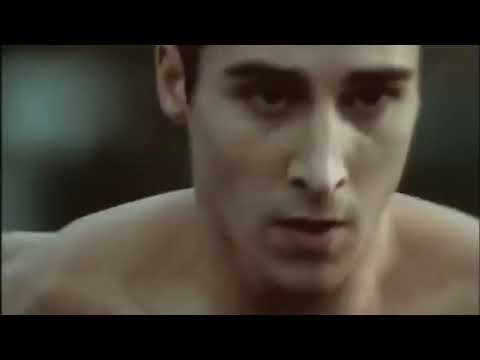
Then, on 9 September 2003, Channel 4 aired the hour that changed everything. Jump London followed Sébastien Foucan, Jérôme Ben Aoues and Johann Vigroux across the capital’s most famous landmarks – the Royal Albert Hall, Shakespeare’s Globe, HMS Belfast – while Foucan quietly explained the philosophy underneath. The word “freerunning”, coined for the film, entered the language overnight. It went on to screen in more than 65 countries, but its deepest impact was here: the morning after, kids across Britain were jumping on walls.
The full film is on YouTube – uploaded by director Mike Christie himself:

2005: Jump Britain
Eighteen months of forum-fuelled obsession later, the sequel arrived on 6 January 2005. Jump Britain took the discipline out of London – the Angel of the North, the Forth Bridge, landmarks the length of the country – and put British practitioners on screen alongside Foucan and Ben Aoues, including members of the Urban Freeflow community that had sprung up in Jump London’s wake. The message landed like a starting gun: this wasn’t a French curiosity any more. It was ours too.

Key facts
| Jump London | Jump Britain | |
|---|---|---|
| First broadcast | 9 September 2003, Channel 4 | 6 January 2005, Channel 4 |
| Director | Mike Christie | Mike Christie |
| Featuring | Sébastien Foucan, Jérôme Ben Aoues, Johann Vigroux | Foucan and Ben Aoues, with British practitioners including Urban Freeflow members |
| Landmarks | Royal Albert Hall, Shakespeare’s Globe, HMS Belfast | Angel of the North, Forth Bridge and more across the UK |
What it meant for Sheffield
Jump Britain aired in the first week of January 2005. Within months, Sheffield had its own parkour group – this one. Our club was founded that year by exactly the generation those broadcasts created, and the early archive of this very website reads like a time capsule of it: Saturday jams meeting outside the Hallam University library near the Globe pub, sessions on library ramps and market squares, visitors travelling in for a “big Sheffield jam… rain or shine”, and eventually a spot on BBC Look North as the guys trained around the city centre.
One of our founders, writing in the site’s old training diary, dated the start of his training to 2005 – the year the second film aired. That’s not a coincidence. That’s what these films did, in every city in Britain.
Where can I watch Jump London now?
It’s never had an official streaming home, but director Mike Christie has uploaded the full film to his own YouTube channel – it’s embedded above. The Rush Hour ident and Jump Britain are also easy to find on YouTube, though those are fan uploads, so they occasionally move around.
Twenty years on
If a twenty-year-old documentary has been quietly sitting in your memory ever since – the itch you never scratched, or the training you drifted away from – consider this your sign. We’re the club those films built, we’re still going, and we still meet every Thursday. Here’s what happened next.
Leave a Reply